

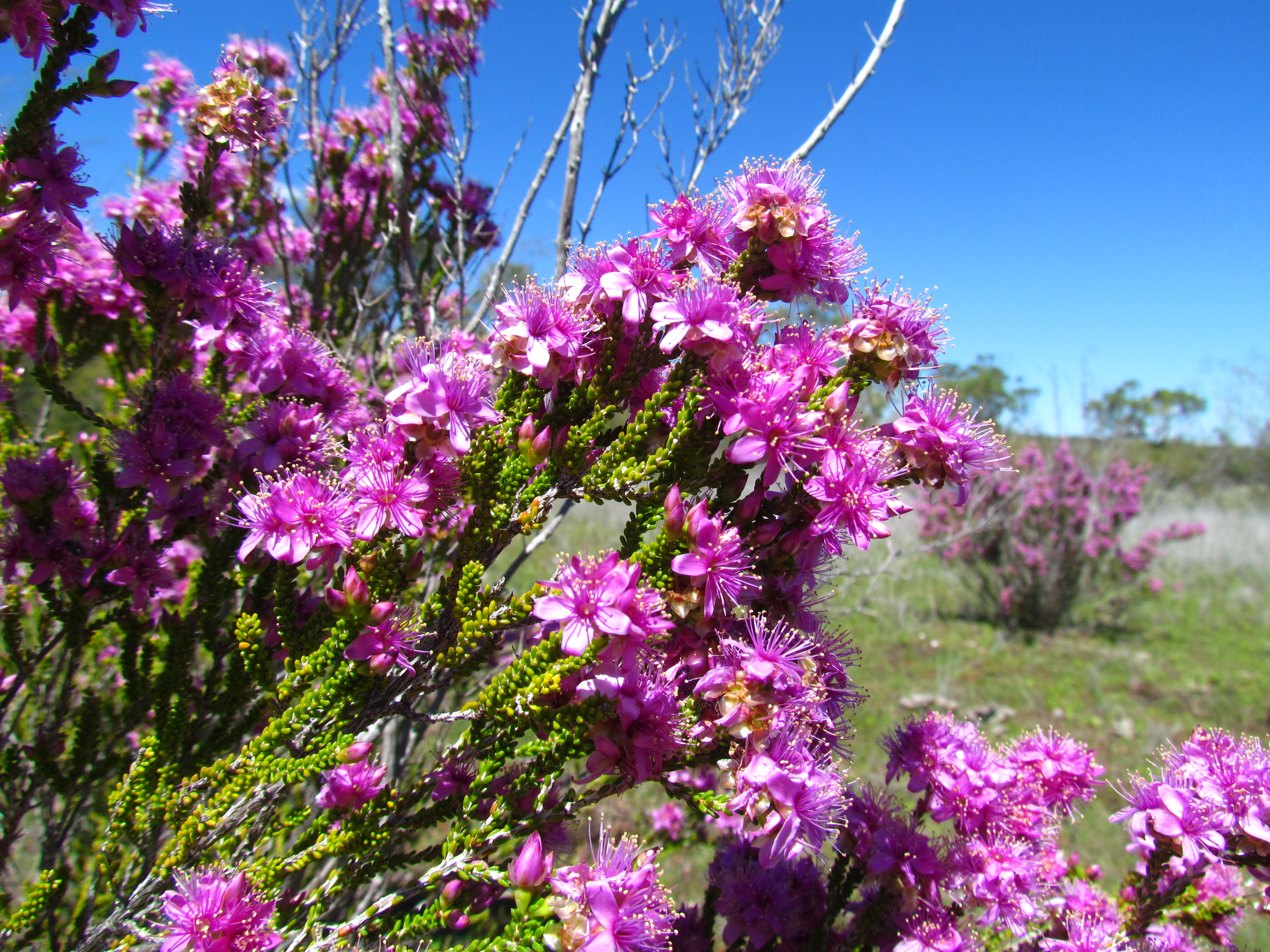
- What do wildflowers look like?
- Wildflowers can be any native flowering plant, including tree, shrubs and herbage.
- Usually associated to form carpets of colours, such as those famous in Western Australia.
- Gum trees can turn snowy white, and drip with nectar, blue blur of bluebells growing on the edges of roads, golden blaze of wattles, rainbow of flowering peas – pink, purple, yellow, orange, red, white.
2. Is spring the best time to see wildflowers or are there other times?
The peak is in spring, however as some plants flower early, there are others which don’t start until later, into summer. The warm weather kicks plants into action as they make the most of it before the summer heat waves start. The lead up to this year’s wildflower season has been dry which can mean the season will be shorter unless the wildflower areas receive some much needed rain.
3. Where are the wildflowers at the moment?
- Places such as Western Australia or the granite belt near Stanthorpe are wildflower mecca.
- Local national parks, state forests, botanic gardens and stock route reserves, can be seen along the roadsides.
- Plants in full flower can be easy to spot, however smaller plants can also be easy to miss. A wildflower stop makes and interesting way to spend your break on a long country drive.
There are wildflowers growing closer to home, right now. Our seasonal Wildflower Wander tour will take you to Gurulmundi, a hotspot of delightful native wildflowers nestled northwest of Miles in southern Outback Queensland. This area is renowned for its plant diversity, attracting plant enthusiasts and travelling tourists alike each year. Rose Aisthorpe, BOOBOOK’s Botanist will lead you on our tour and her enthusiasm for all plants great or small will ensure you will see plenty of things the average visitor passes without noticing. There are multiple stops along the tour, including our fully catered home-baked morning tea and tasty picnic lunch set amongst a backdrop of colourful flowers.
4. Can you pick the flowers to take home?
No, it’s better to take photos of them, because many don’t last long. Picking them also prevents the plants setting seed for future generations of wildflowers. It also means that other visitors won’t get to enjoy them either.
 5. If I don’t get to see them this year, can I still see them next year?
This depends on next year’s season, however most shrubby and tree species will get flowers next year. Annual herb species rely on timing and amount of lead up rainfall. The spring wildflowers during the years of the floods were astounding, thanks to all the rain, whereas in the drought there were much fewer flowers about. However the variation in season gives different plants the opportunity to flower more or less year-to-year, so you will see different results next year compared to now.
6. Has Boobook got a favourite local wildflower spot?
We like to keep finding new places to see wildflowers locally but there are a couple of spots worth visiting:
- 30 km north of Roma along Grafton Terrace Rd, via Roma-Taroom Rd is good day trip to see wonga vines, bush peas, wattles and a few others
- For those heading out west, 10 km south of Charleville has some great grevillea and other beautiful heaths
- And of course, Gurulmundi, as mentioned previously.
If you’d like to join us on one of our Wildflower Wander Tours, we’re running 6 tours in August and September this year. It’s a great opportunity to learn about local and native flowers from an expert, so you better get in quick. Go to the tour page to find out more about dates, pricing and to book.